01 · Flagship Case Study
From Nested Modals to Confident Maintenance Workflows
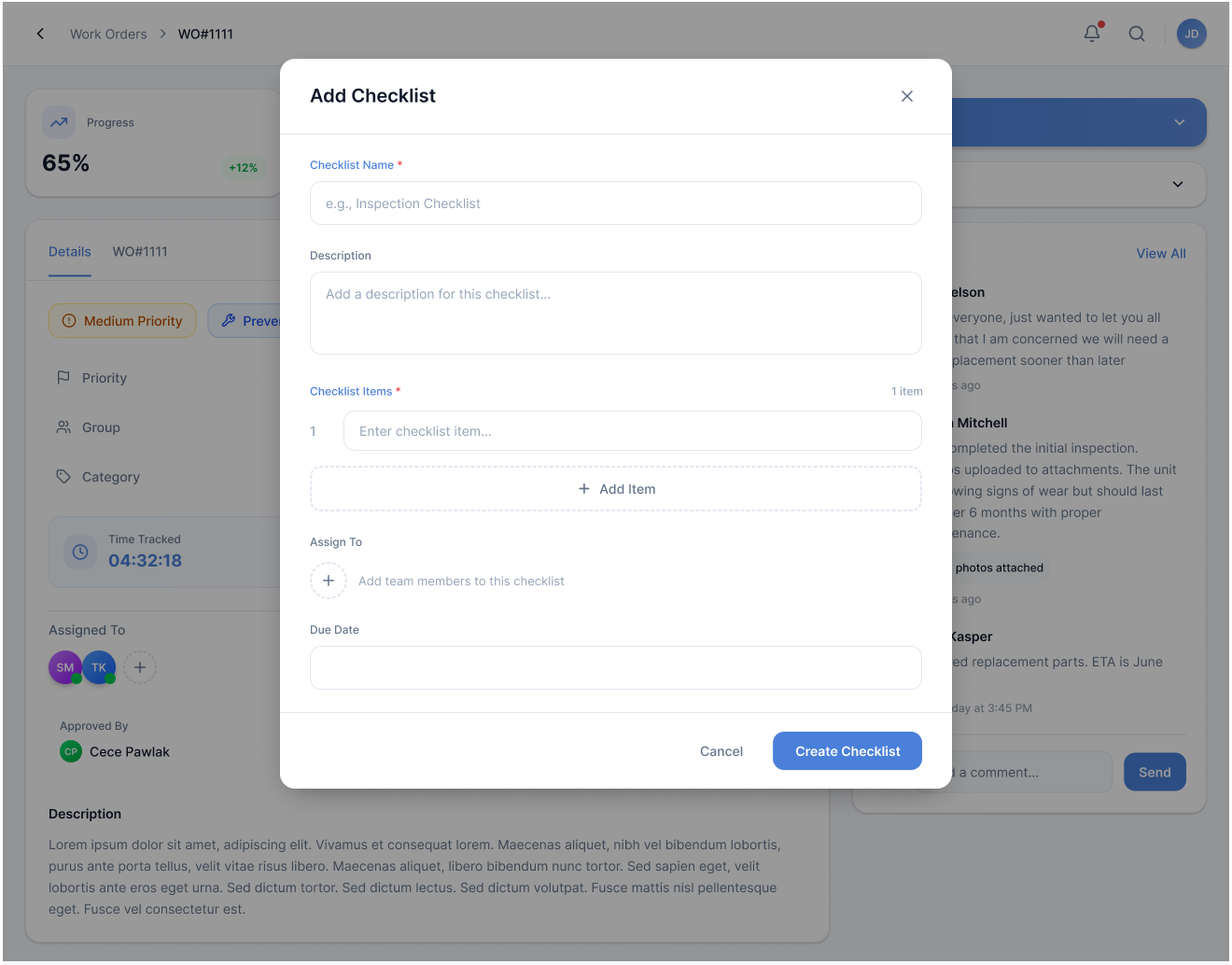
Helixintel’s enterprise insurance clients were losing confidence in the platform. The screen doing the damage was the most-used one in the product: the work order. It felt untrustworthy. I led a year-long redesign that replaced a nested-modal labyrinth with a role-zoned full-page experience. Trust returned. Tickets dropped 90%.
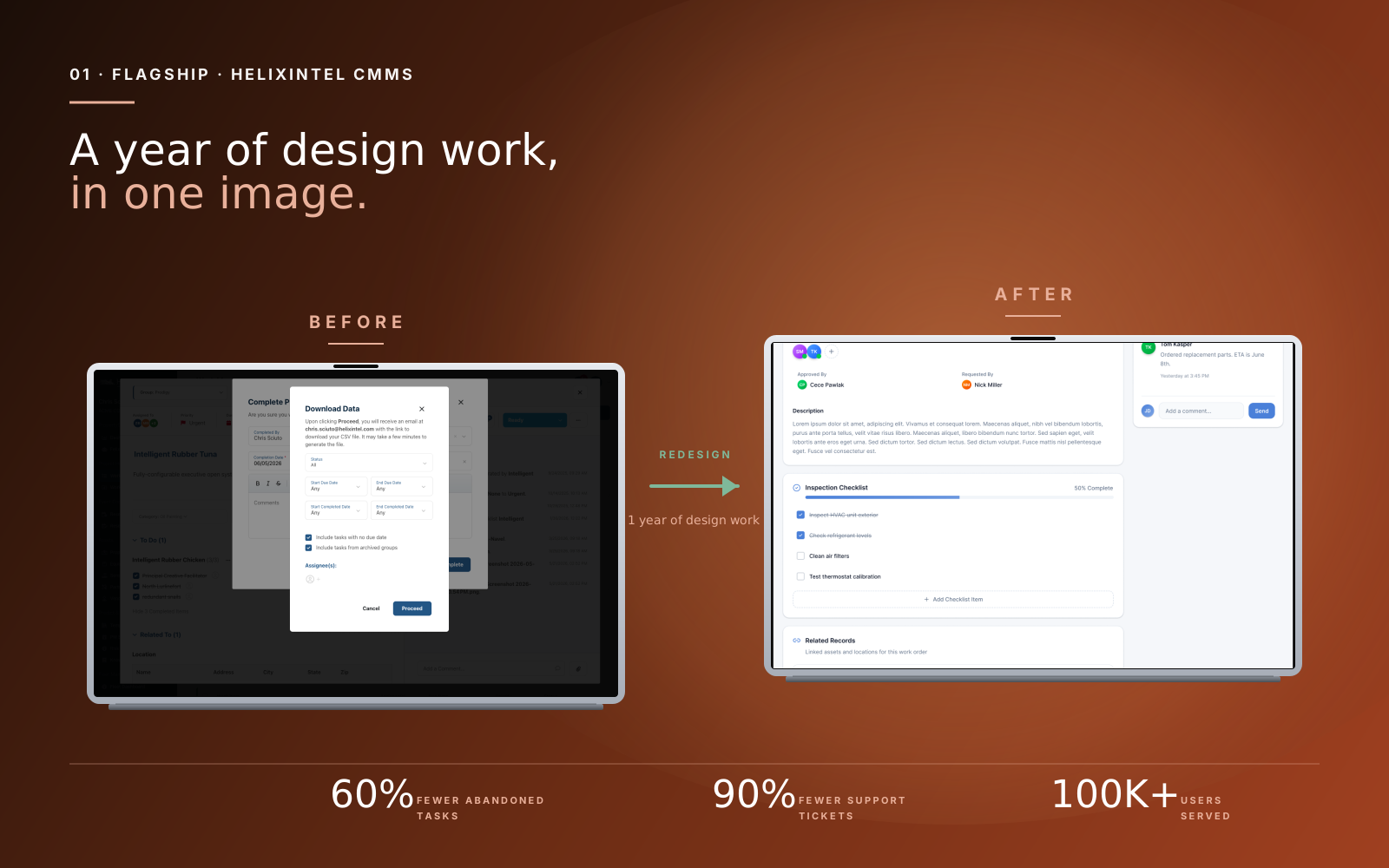
The problem
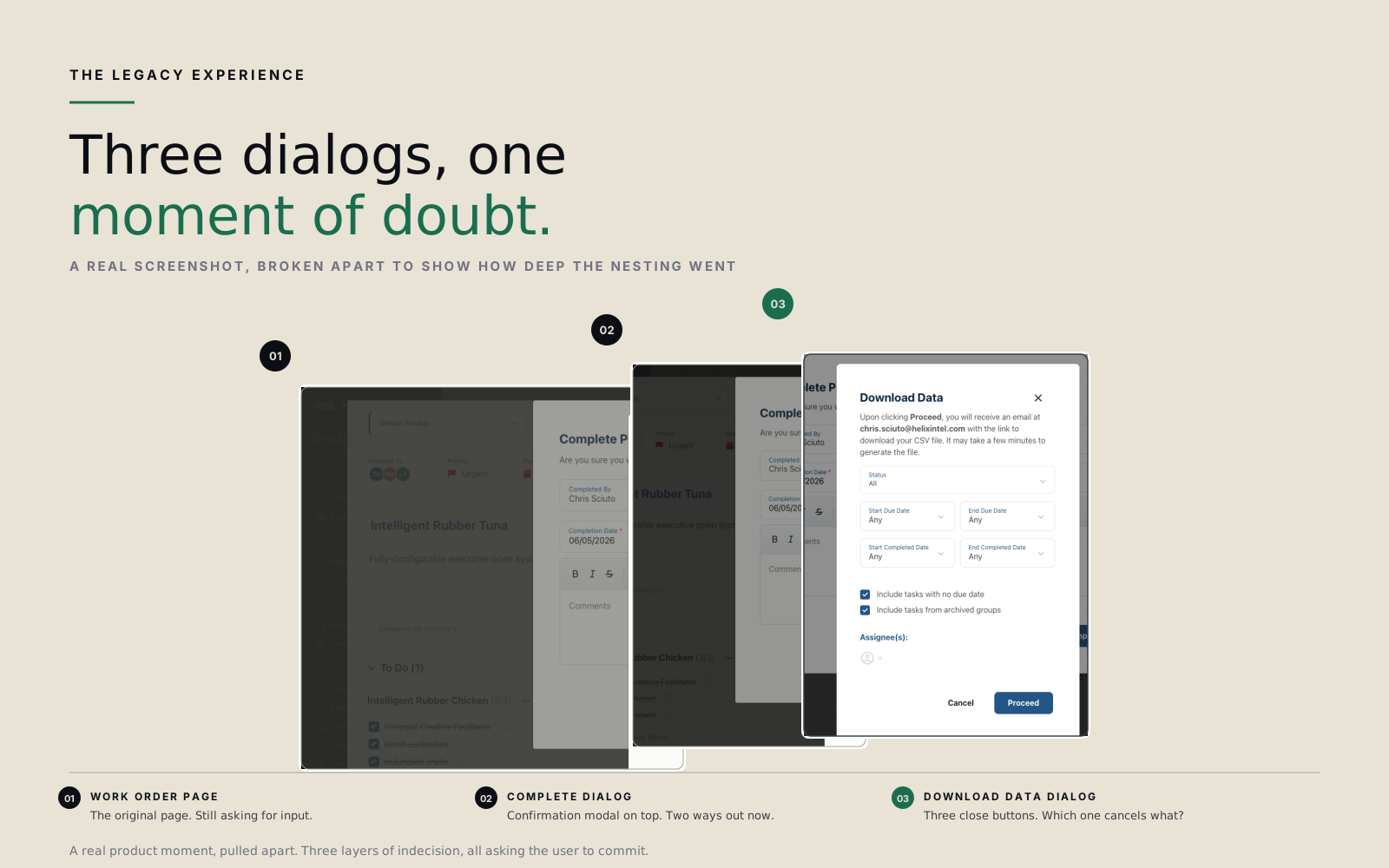
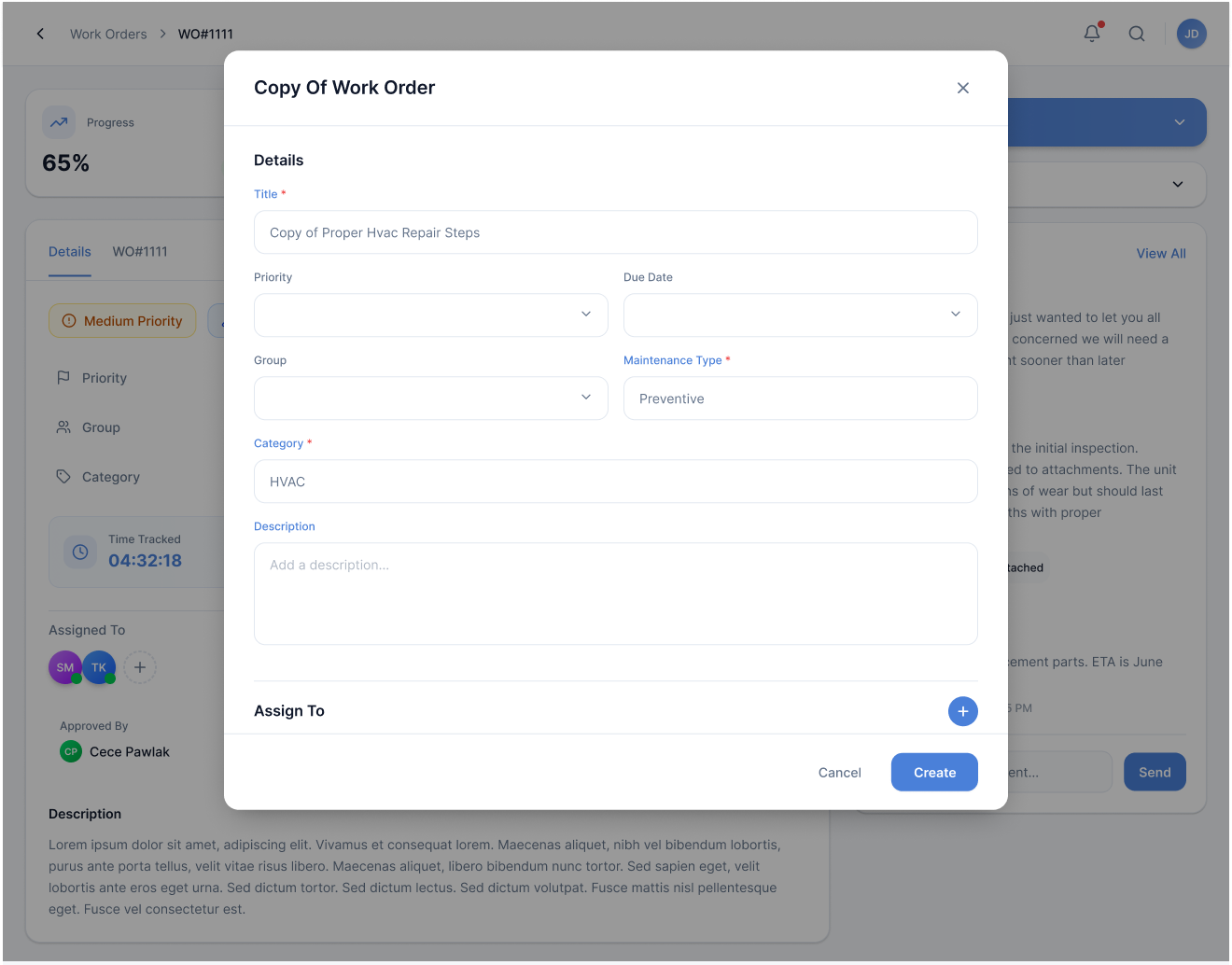
The work order was a modal with modals nested inside it. Creation fields, comments, checklists, and time tracking all crammed into one space. Save state was ambiguous, so users hesitated, repeated actions, or just abandoned what they were doing. Sometimes they lost hours of work.
Customer Service was drowning in tickets that weren’t about broken functionality. They were about an interface that felt untrustworthy. For enterprise insurance clients whose risk and compliance teams depend on accurate maintenance records, that uncertainty eroded confidence in the platform itself.
Research & approach
- 01 Ran qualitative research with 10 users across creator and technician roles, recruiting participants with recent work order activity so we’d hit the real moments of uncertainty, not the hypothetical ones.
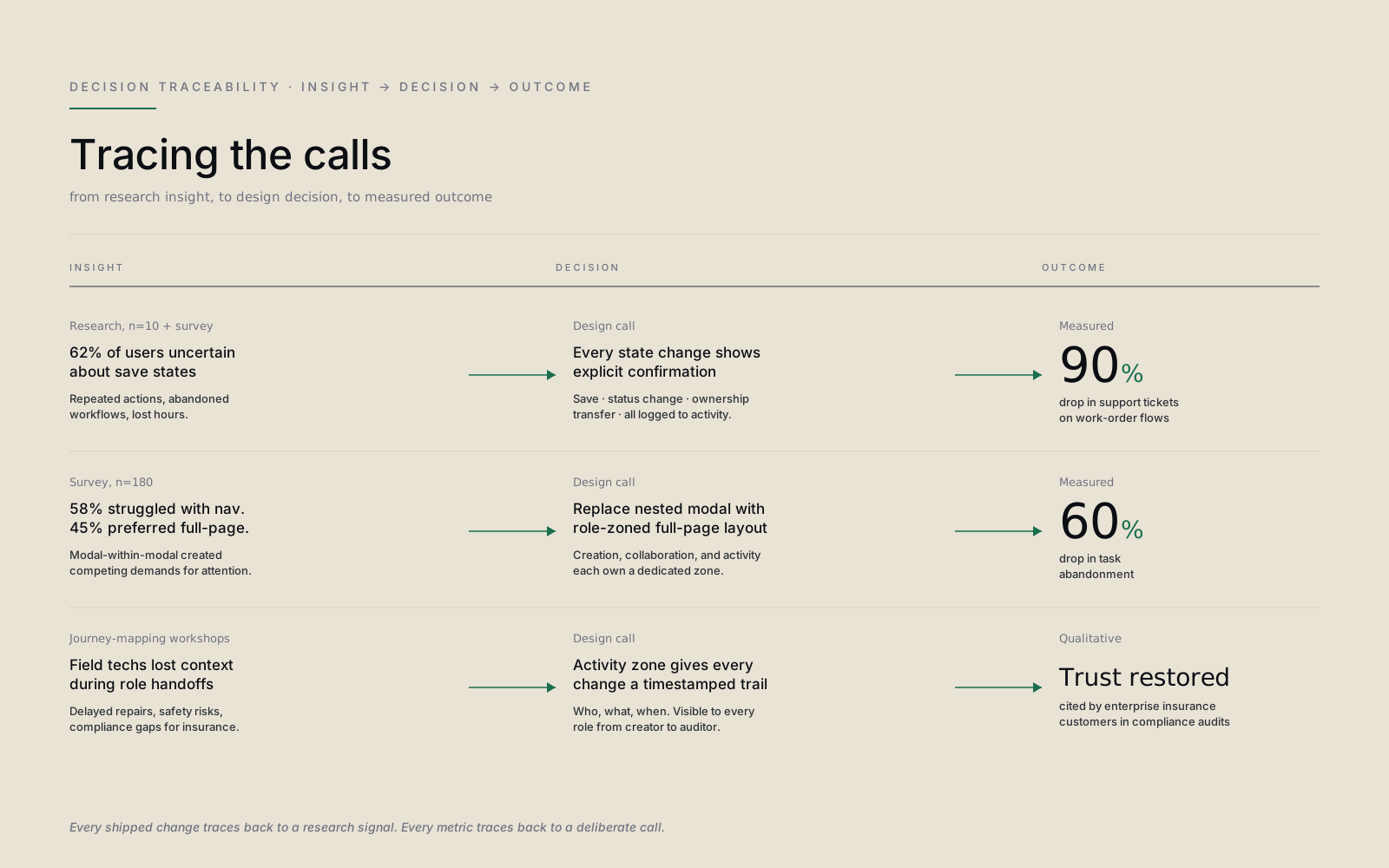
- 02 Used the findings to make the case for a year-long overhaul instead of another round of patch fixes. 62% were uncertain on save states. 58% struggled with navigation. 45% preferred full-page layouts for complex work orders. The data made the argument. Leadership committed the resources.
- 03 Ran journey-mapping workshops with Product, Engineering, and Customer Service. The goal wasn’t a deliverable. It was cross-functional alignment on the handoff moments where creators couldn’t confirm assignments and technicians lost context.
- 04 Designed the full-page layout. Clear section hierarchy, visible save feedback, predictable action placement. Creation separated from collaboration. Activity given its own zone.
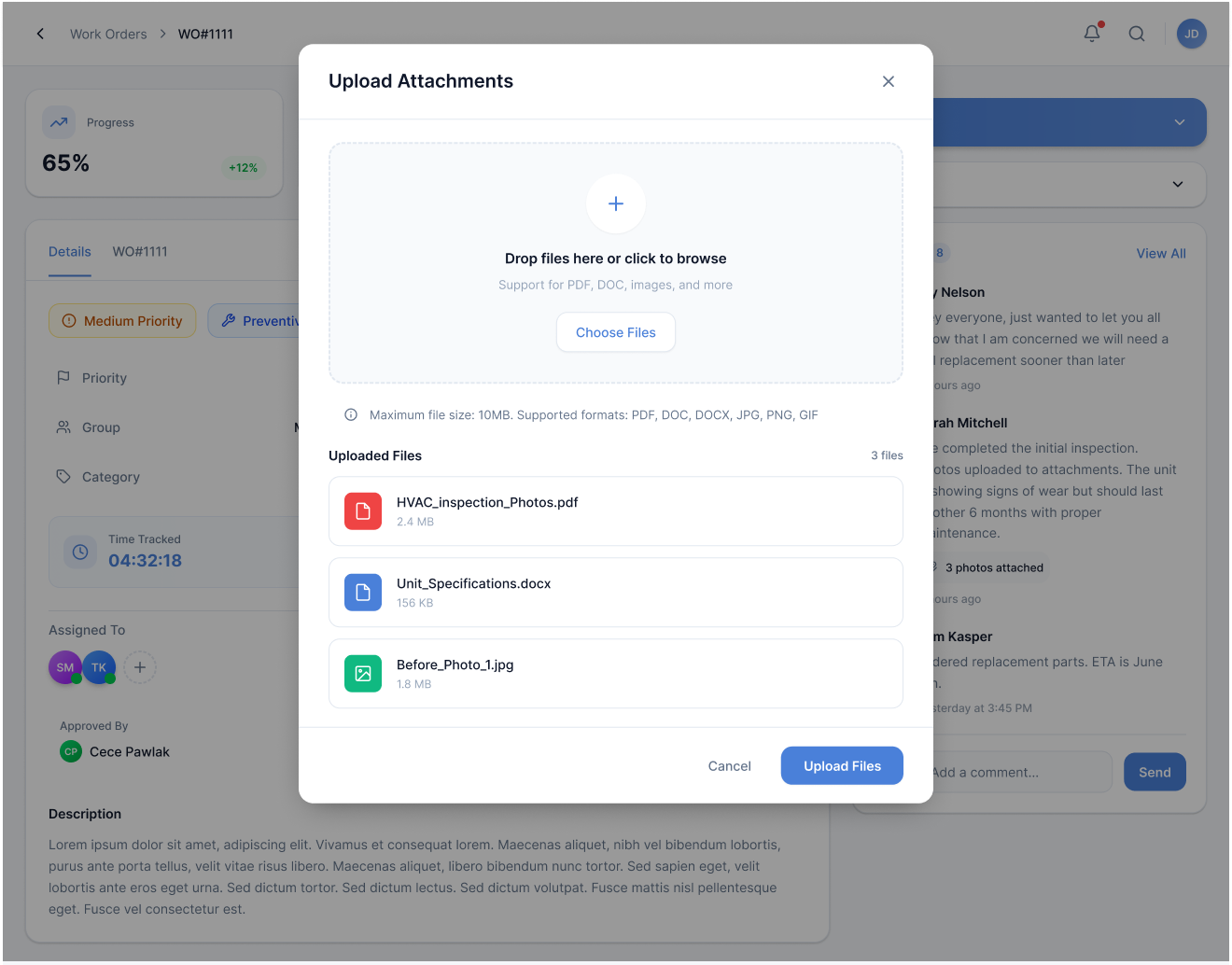
- 05 Negotiated a beta program with anchor enterprise customers to validate the patterns in production before broader rollout. Ran mixed-role usability testing to refine action visibility and keep secondary features within reach without letting them crowd the primary workflow.
The solution
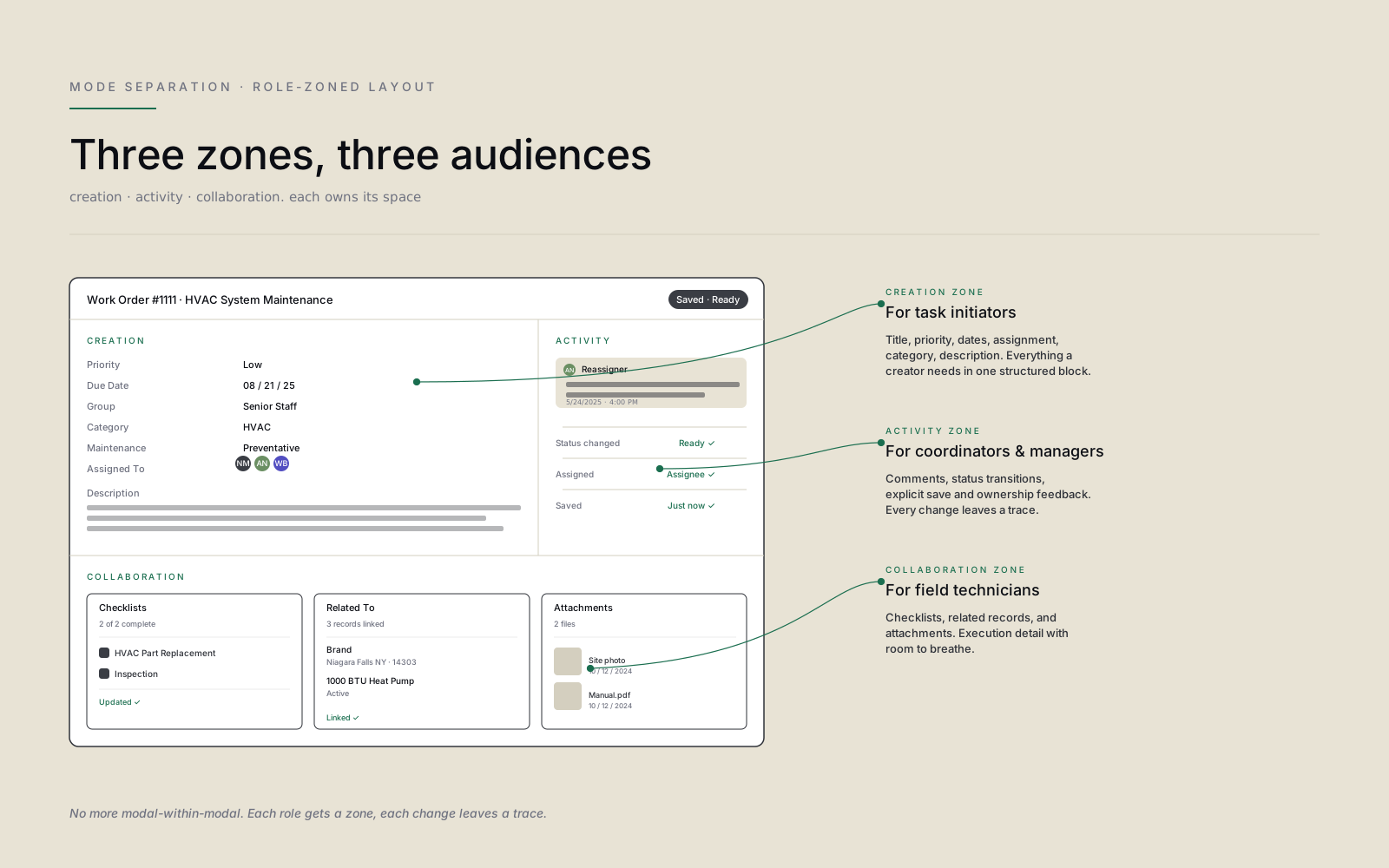
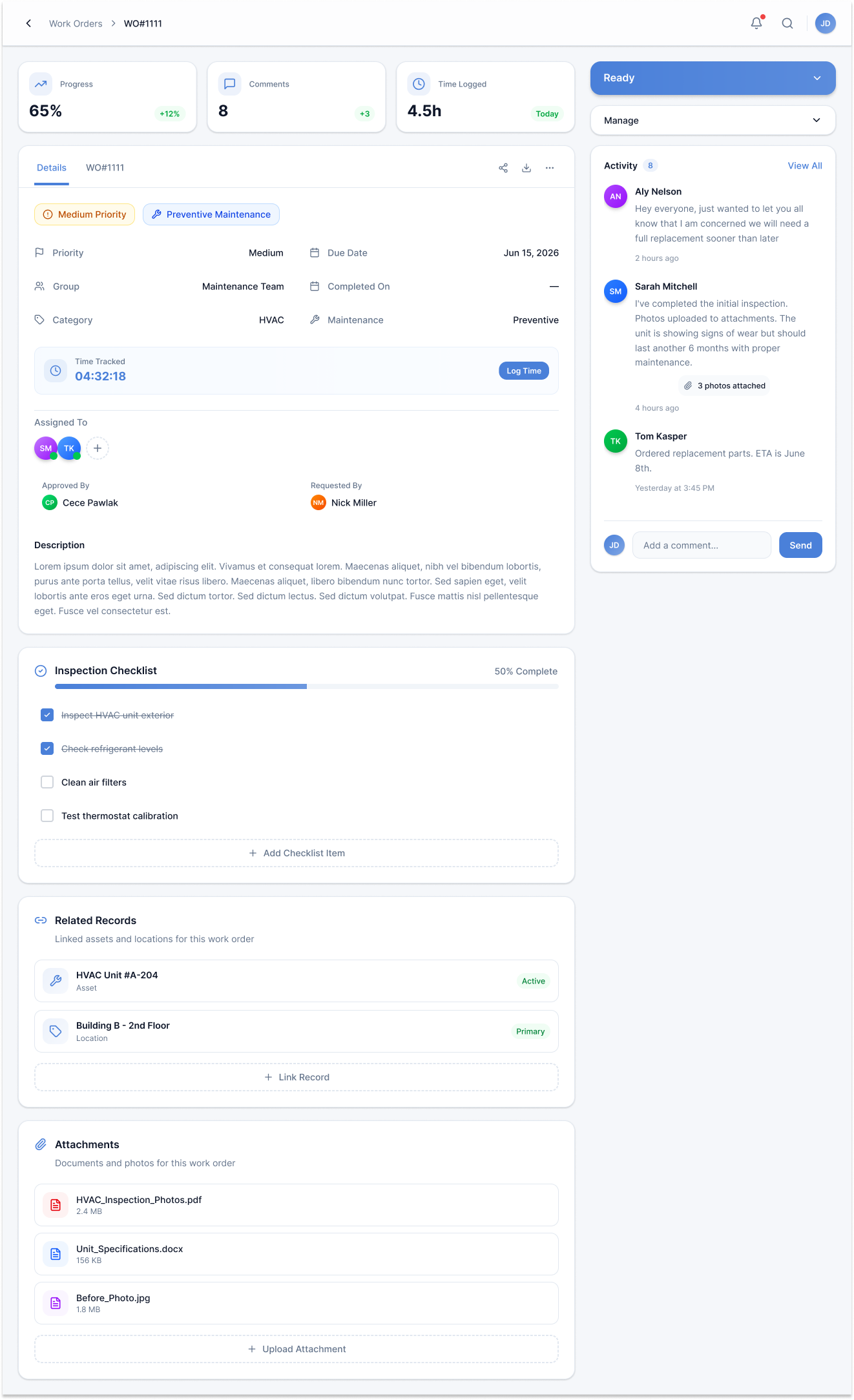
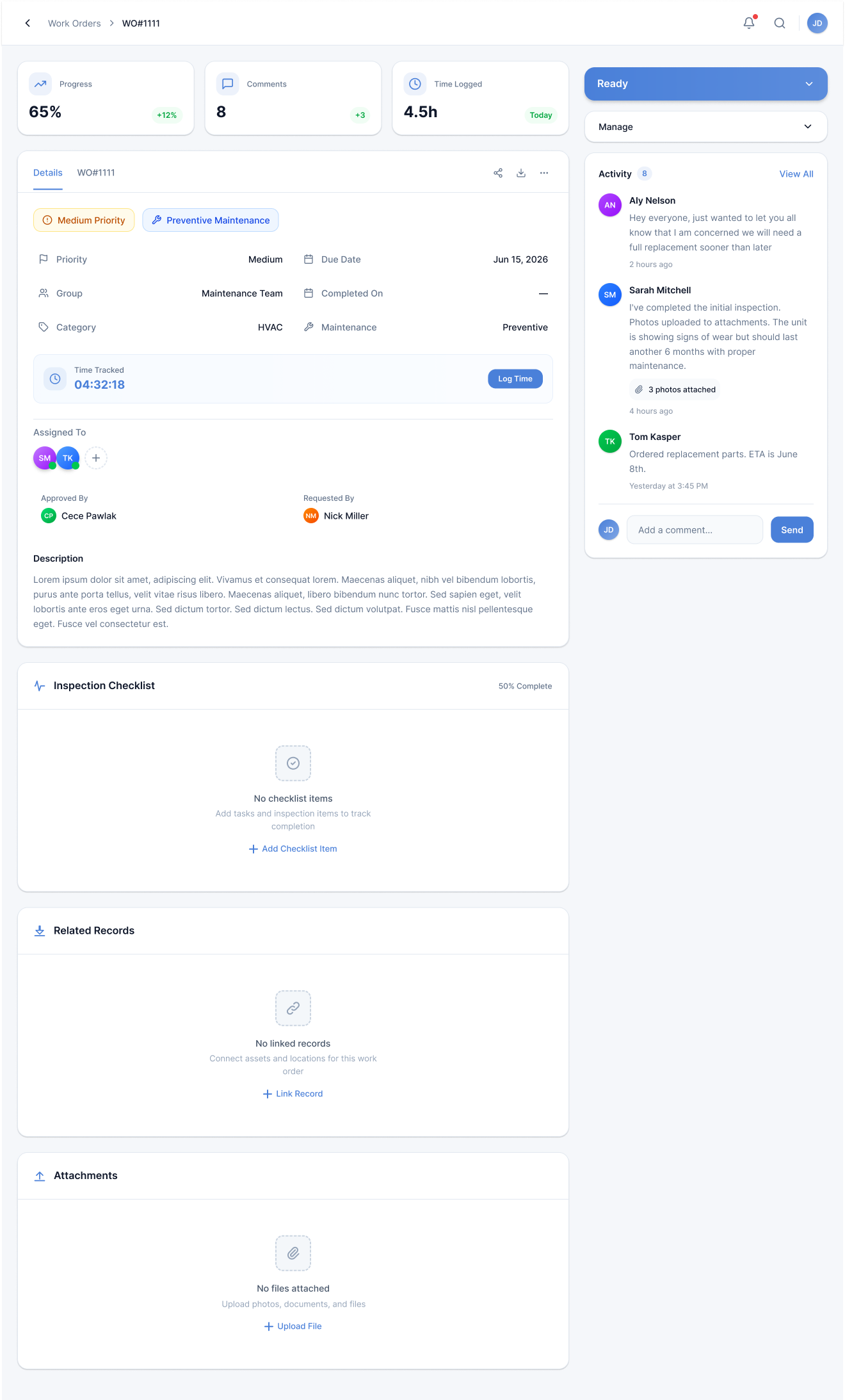
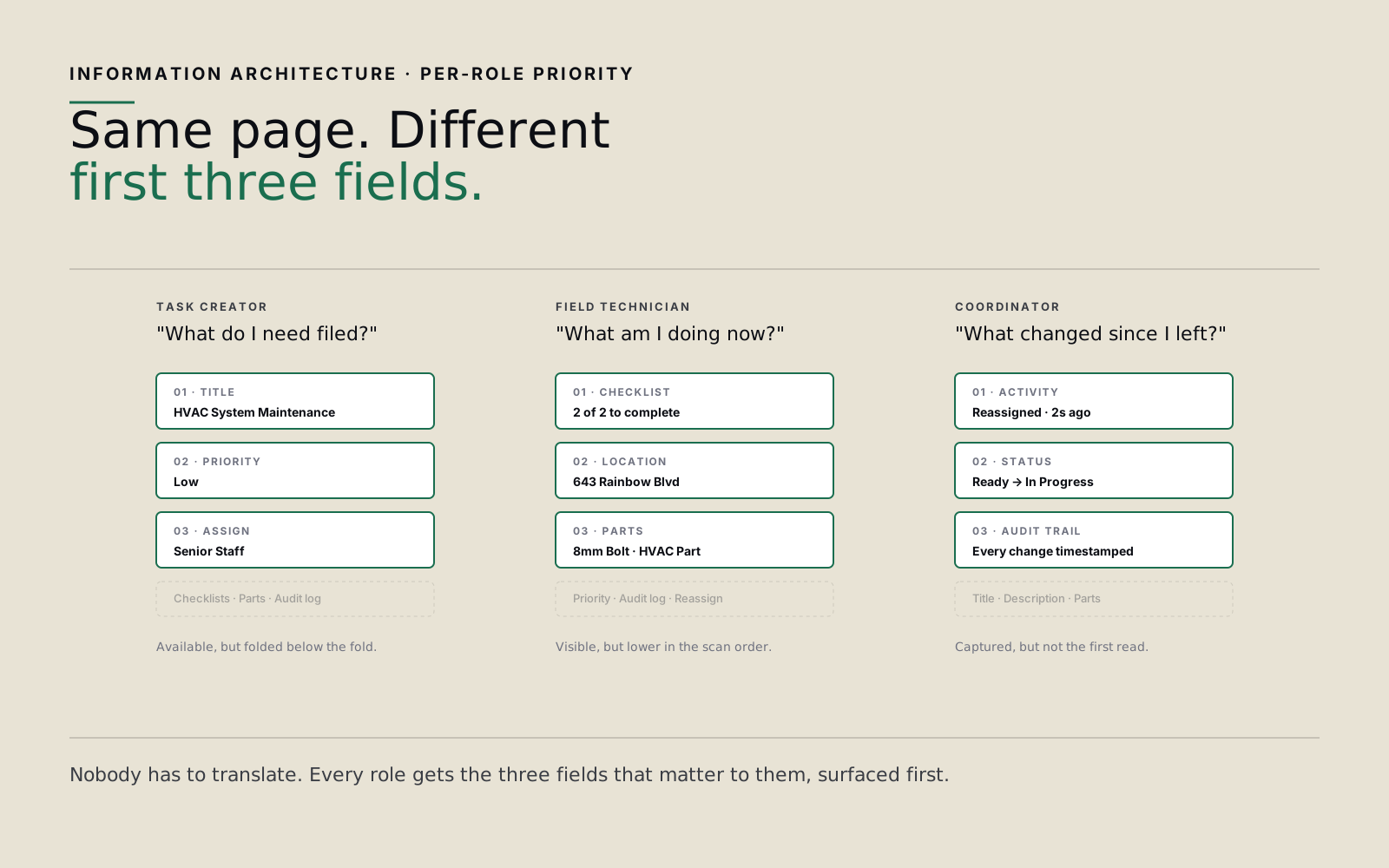
I replaced the nested modal with a full-page work order that gave each workflow room to breathe. Information is organized by role: core creation details for task initiators, collaboration features for field technicians, an activity stream for coordinators. Every state change shows explicit feedback. Every role can follow the story of a work order without hunting through layers.
Strategic mode separation
Creation and collaboration each get their own zone. Related records, checklists, and the activity stream don’t compete for the same space anymore. That’s where the support tickets came from.
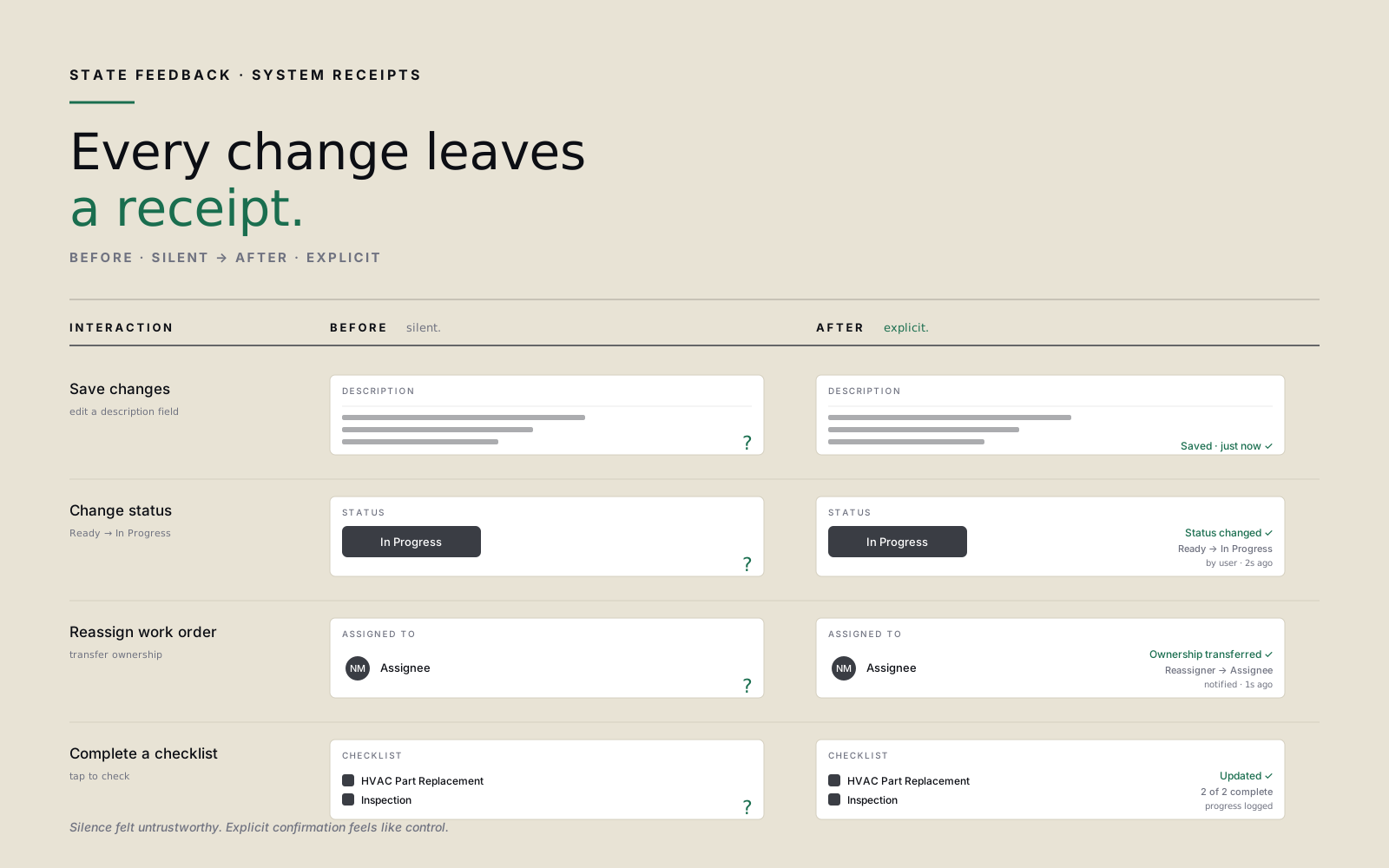
Trust-building system feedback
Every save and status change now shows visible confirmation. The system answers back. That’s the difference between a tool people trust and a tool they ping support about.
Role-optimized information architecture
Empty states walk new users through clear next steps. Filled states surface the full hierarchy: location, equipment, parts, technician assignments, audit trail. Creators capture the essentials. Technicians get straight to execution. Neither role has to translate the other’s view.
Team & leadership impact
- Led
- Lead Product Designer at Helixintel, end-to-end on the work order overhaul
- Partnered with
- VP of Customer Success, Product Director, Customer Service leadership, enterprise insurance partners, engineering on implementation
The patterns we shipped here became the contribution model the team uses for new surfaces in the broader CMMS overhaul. Beyond the metrics, the lasting effect was structural. The work order is no longer a conversation about “is this saved?” in standups or support queues. It’s a stable foundation the rest of the product builds on.
What I’d do differently
We deferred bulk-action workflows to phase 2 to keep the initial scope manageable. Customers asked for them loudly within the first month. If I were running it back I’d ship bulk actions in phase 1 and trade off a less polished empty state. Filled state is where 95% of usage lives. That’s where investment should go first.
Three nested dialogs collapsed into one role-zoned page, and 90% of the work-order support tickets that had been dogging the team went with them.